
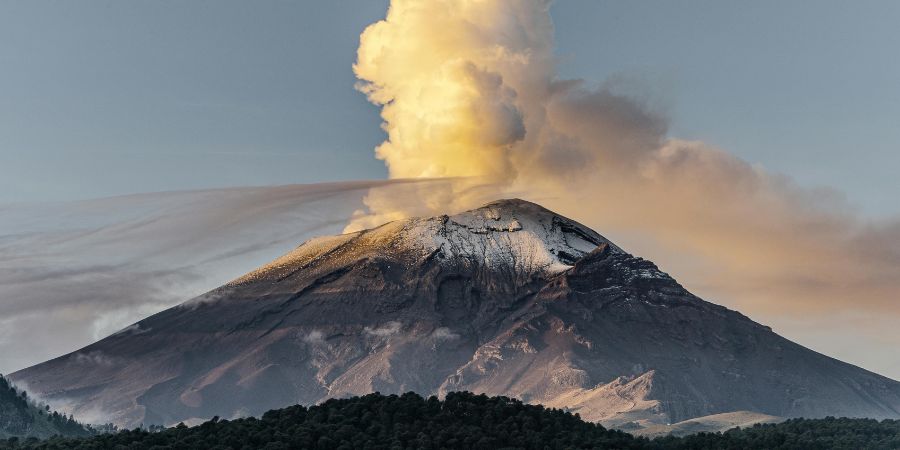
The United States is home to some of the world’s most remarkable volcanic landscapes. From the glacier-covered peaks of Washington and Alaska to the enormous shield volcanoes of Hawaii, these mountains provide a fascinating look at the geological forces that continue to shape our planet.
Volcanoes are more than dramatic mountain peaks. They are living geological systems formed by magma, tectonic plates, hotspots, and volcanic activity over thousands or even millions of years. Some are dormant, while others remain capable of future eruptions.
According to the U.S. Geological Survey (USGS), the United States has more than 160 potentially active volcanoes, with many concentrated in Alaska, Hawaii, and the Pacific Northwest.
For travelers, these volcanoes offer opportunities for hiking, sightseeing, photography, wildlife viewing, scientific exploration, and learning about Earth’s geological history. However, volcanic areas can also present serious hazards, so visitors should always check official conditions before traveling.
In this guide, we’ll explore 10 incredible volcanic mountains in the USA, including their locations, geological characteristics, history, attractions, and what makes each one unique.
| Volcano | State | Elevation | Volcano Type | Why It Is Notable |
|---|---|---|---|---|
| Mount Rainier | Washington | 14,411 ft | Stratovolcano | Glaciers and major lahar hazards |
| Mount St. Helens | Washington | 8,363 ft | Stratovolcano | Famous 1980 eruption |
| Mount Hood | Oregon | 11,249 ft | Stratovolcano | Oregon’s highest mountain |
| Mount Shasta | California | 14,179 ft | Stratovolcano | Massive, isolated volcanic peak |
| Kīlauea | Hawaii | ~4,090 ft | Shield volcano | One of Earth’s most active volcanoes |
| Mauna Loa | Hawaii | 13,681 ft above sea level | Shield volcano | One of Earth’s largest volcanoes |
| Mount Baker | Washington | 10,781 ft | Stratovolcano | Extensive glaciers and heavy snowfall |
| Redoubt Volcano | Alaska | 10,197 ft | Stratovolcano | Powerful explosive eruptions |
| Lassen Peak | California | 10,457 ft | Lava dome | Historic eruptions and geothermal features |
| Shishaldin Volcano | Alaska | 9,373 ft | Stratovolcano | Nearly symmetrical volcanic cone |
Elevations and volcanic activity can be updated by scientific agencies, so visitors should consult official park and USGS information before planning a trip.
Mount Rainier is one of the most recognizable volcanic mountains in the United States. Rising to 14,411 feet, it dominates the Washington landscape and is surrounded by extensive glaciers and alpine environments.
Rainier is a stratovolcano, a type of volcano built from repeated layers of lava, ash, and other volcanic materials. Its combination of steep slopes, glaciers, and volcanic history makes it scientifically important as well as visually spectacular.
One of the mountain’s most significant hazards is the possibility of lahars. These are fast-moving volcanic mudflows made from water, rock, ash, and sediment. Because Mount Rainier has a large amount of glacial ice, scientists pay particular attention to this hazard.
For visitors, Mount Rainier National Park offers hiking, scenic viewpoints, wildlife watching, wildflower meadows, and challenging mountaineering routes.
The Wonderland Trail, a roughly 93-mile route around the mountain, is one of the park’s best-known long-distance hiking experiences.
Mount St. Helens is perhaps the most famous volcano in the continental United States because of its catastrophic 1980 eruption.
On May 18, 1980, a massive landslide and explosive eruption dramatically changed the mountain. The eruption removed a large portion of the summit and devastated forests across a wide area.
What makes Mount St. Helens particularly valuable today is that it provides scientists with a natural laboratory for studying volcanic activity and ecological recovery.
Visitors can explore the Mount St. Helens National Volcanic Monument, where viewpoints, trails, visitor centers, and educational exhibits explain the eruption and the landscape’s recovery.
The mountain demonstrates an important geological lesson: volcanic landscapes can change dramatically in a very short period.
Rising to approximately 11,249 feet, Mount Hood is Oregon’s highest mountain and one of the state’s most recognizable landmarks.
It is a stratovolcano located in the Cascade Range. Snow and glaciers cover parts of the upper mountain, while forests, lakes, and alpine landscapes surround its lower slopes.
Mount Hood attracts hikers, climbers, skiers, photographers, and outdoor enthusiasts throughout the year.
The mountain is particularly popular because of its proximity to Portland, making it one of the more accessible major volcanic peaks in the Pacific Northwest.
However, high-elevation weather can change quickly. Anyone attempting technical climbing should have appropriate training and equipment.
Mount Shasta rises dramatically above northern California, reaching approximately 14,179 feet.
Its enormous, isolated appearance makes it one of the most impressive volcanic mountains in the Cascade Range.
Mount Shasta is a stratovolcano made up of overlapping volcanic structures that developed through repeated periods of eruption.
The mountain is popular with hikers, climbers, photographers, and nature enthusiasts. Its glaciers, snowfields, forests, and surrounding wilderness create a diverse landscape.
Beyond its geological importance, Mount Shasta also has cultural significance for several Native communities. Visitors should respect Indigenous traditions and culturally important areas when exploring the region.
Kīlauea is fundamentally different from the tall stratovolcanoes of the Cascades.
It is a shield volcano, meaning it has broad, gently sloping sides created primarily by fluid lava flows.
Located within Hawaiʻi Volcanoes National Park, Kīlauea is one of the world’s best-known active volcanic systems.
Its eruptions have repeatedly created and reshaped land. Lava flows can cover existing landscapes, create new rock formations, and alter coastlines.
The volcano provides visitors with a unique opportunity to learn about volcanology while exploring lava fields, volcanic craters, forests, and geothermal landscapes.
Because Kīlauea remains an active volcano, conditions can change quickly. Visitors should always follow current park closures, eruption notices, and safety instructions.
Mauna Loa is one of the most remarkable volcanoes on Earth.
Although its summit reaches 13,681 feet above sea level, much of the volcano is hidden beneath the Pacific Ocean. Measured from its submarine base, the mountain extends more than 30,000 feet upward.
Like Kīlauea, Mauna Loa is a shield volcano. Its broad shape developed through enormous quantities of relatively fluid lava.
Mauna Loa has erupted repeatedly throughout its geological history, with its most recent eruption occurring in 2022.
Its enormous size makes it an important subject for volcanologists studying Hawaiian volcanic systems and the formation of oceanic islands.
Mount Baker reaches approximately 10,781 feet and is located in the northern Cascade Range.
The mountain is known for its extensive glaciers, snow-covered summit, and spectacular alpine scenery.
Mount Baker is also famous for extraordinary snowfall. Its surrounding landscape provides opportunities for hiking, skiing, climbing, photography, and wildlife observation.
Like other Cascade volcanoes, Mount Baker is monitored because it remains a potentially active volcanic system.
The combination of glaciers and volcanic terrain also makes it an excellent example of how geological and climatic processes interact to shape mountains.
Located on the Alaska Peninsula, Redoubt Volcano rises to approximately 10,197 feet.
It is a stratovolcano and has experienced several significant eruptions in modern history. Its 2009 eruption produced ash clouds that affected aviation in the region.
Volcanic ash is particularly dangerous for aircraft because fine particles can damage or shut down jet engines. This makes monitoring Alaska’s volcanoes important not only for nearby communities but also for air travel.
Redoubt’s remote location gives it a dramatically different character from volcanoes near major cities. The surrounding Alaskan wilderness provides a striking combination of mountains, glaciers, and volcanic terrain.
Lassen Peak reaches approximately 10,457 feet and is located within Lassen Volcanic National Park.
Unlike many of the large stratovolcanoes on this list, Lassen Peak is a lava dome.
The mountain experienced a series of eruptions between 1914 and 1917, making it one of the most recent volcanoes to erupt in the contiguous United States.
The surrounding national park contains an impressive variety of volcanic features, including fumaroles, hot springs, boiling mud pots, and other hydrothermal areas.
These features demonstrate that volcanic activity does not always appear as a dramatic eruption. Heat from underground magma can continue to influence the landscape through geothermal activity.
Shishaldin Volcano is located on Unimak Island in Alaska’s Aleutian Islands.
Rising approximately 9,373 feet, it is widely recognized for its remarkably symmetrical cone.
Shishaldin is a stratovolcano and one of the more frequently active volcanic systems in the Aleutian region.
Its remote setting makes it difficult for ordinary tourists to access, but it remains highly important to volcanologists and researchers monitoring volcanic activity in Alaska.
The mountain also demonstrates why Alaska is so significant to American volcanology: the state contains a large concentration of active and potentially active volcanoes.
The formation of volcanic mountains is closely connected to plate tectonics.
Deep beneath Earth’s surface, enormous tectonic plates move slowly. At certain locations, these movements create conditions that allow magma to rise toward the surface.
Two major geological processes explain many U.S. volcanoes.
Along the Pacific Northwest and Alaska, tectonic plates interact in ways that allow magma to form deep underground.
For example, the Juan de Fuca Plate is being forced beneath the North American Plate. This process contributes to the volcanic activity of the Cascade Range.
Mount Rainier, Mount St. Helens, Mount Hood, and Mount Baker are part of this volcanic system.
Hawaii’s volcanoes have a different origin.
The Hawaiian Islands formed as the Pacific Plate moved over a relatively stationary source of rising heat and magma known as a hotspot.
Repeated volcanic eruptions gradually built enormous shield volcanoes such as Mauna Loa and Kīlauea.
Volcanoes provide scientists with valuable information about the interior of Earth.
Studying volcanoes can help researchers understand:
Modern monitoring systems use instruments such as seismometers, GPS equipment, satellite imagery, gas sensors, and thermal cameras to detect changes that may indicate volcanic activity.
Volcanic mountains can be beautiful tourist destinations, but they are natural environments with real hazards.
Potential dangers include:
The level of risk varies significantly between volcanoes and can change over time.
That is why travelers should never rely only on old travel information when visiting an active or potentially active volcano.
If you plan to visit one of these volcanic mountains, preparation is essential.
Safety is particularly important because volcanic landscapes can appear calm even when dangerous geological processes are occurring underground.
Volcanic mountains also have deep cultural significance for Indigenous peoples.
Mount Rainier, Mount Shasta, Mount Hood, and Hawaiian volcanoes are connected with traditional stories, spiritual beliefs, cultural practices, and ancestral relationships with the land.
For travelers, learning about these perspectives adds another dimension to a visit.
Respecting sacred sites, following access restrictions, and learning from reliable Indigenous sources are important parts of responsible tourism.
| If You Want… | Consider |
| Glacier scenery | Mount Rainier |
| Volcanic history | Mount St. Helens |
| Hiking and mountain views | Mount Hood |
| High-altitude adventure | Mount Shasta |
| Active volcanic landscapes | Kīlauea |
| Massive geological scale | Mauna Loa |
| Snow and alpine scenery | Mount Baker |
| Remote wilderness | Redoubt Volcano |
| Geothermal features | Lassen Peak |
| Dramatic volcanic cone | Shishaldin |
Mount St. Helens is one of the most famous because of its catastrophic 1980 eruption. Mount Rainier, Kīlauea, and Mauna Loa are also internationally recognized volcanic mountains.
The USGS identifies more than 160 potentially active volcanoes in the United States. The exact number and classification can depend on the scientific criteria being used.
No. Volcanic risk varies considerably. Some volcanoes are closely monitored because they are capable of future activity, while others have extremely long periods between eruptions.
Yes. Some active volcanic areas, particularly in Hawaii, can be visited when conditions allow. However, access can change quickly because of eruptions, gases, lava, earthquakes, or other hazards.
Mauna Loa in Hawaii is generally recognized as the largest volcano on Earth by volume. Its enormous structure extends from the ocean floor to its summit.
The volcanic mountains in the USA offer far more than spectacular scenery. They provide a window into the geological processes that have shaped North America and continue to change the planet today.
From the glacier-covered slopes of Mount Rainier and the historic eruption landscape of Mount St. Helens to the active volcanic systems of Kīlauea and the enormous structure of Mauna Loa, each mountain tells a different geological story.
For travelers, these destinations offer hiking, photography, education, wildlife experiences, and opportunities to see geological features that cannot be found in ordinary mountain ranges.
But the most important lesson is that volcanoes are dynamic natural systems. Their landscapes can change, and conditions can become hazardous without much warning.
Whether you are interested in geology, adventure, nature, or American geography, exploring these remarkable volcanic mountains can provide a deeper understanding of how Earth’s surface is created, destroyed, and continuously transformed.

Welcome to the future of digital storytelling, where creativity meets innovation. We’re not just a magazine platform; we’re a team of passionate visionaries committed to transforming how stories are shared, celebrated, and experienced in the digital age. Join us as we inspire, inform, and redefine the world of digital magazines.
© Copyright 2026 | educationeureka | All Rights Reserved.