
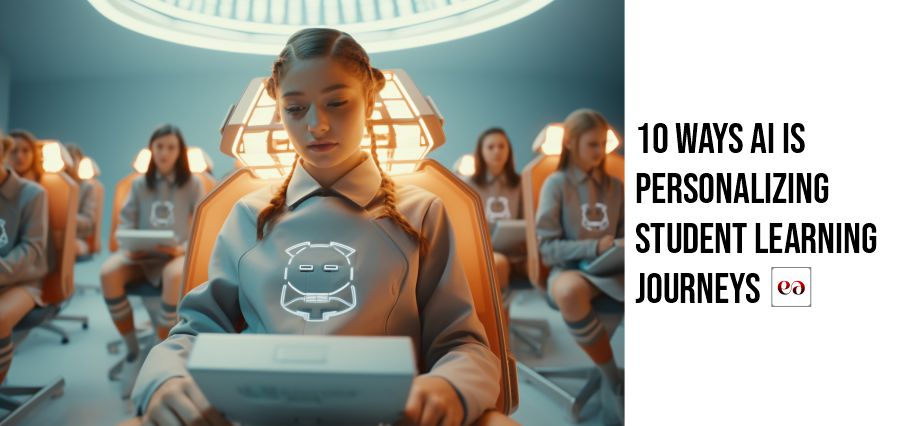
Personalized learning once felt like a classroom dream. Today it is reality. Artificial intelligence is reshaping how students learn, how teachers teach, and how schools design education. The result is learning that adapts to each student instead of forcing students to adapt to one-size-fits-all systems.
This change matters deeply. Students learn differently. They have unique strengths, weaknesses, paces, and motivations. Standard teaching systems have long struggled to meet each learner where they are. That is shifting now, and fast.
Here are 10 ways AI is personalizing student learning journeys in meaningful, human-centered ways.
1 Personal Learning Paths Based on Real-Time Data
AI systems can now monitor student progress continually. Instead of waiting for weekly or monthly assessments, these systems analyze responses, behaviors, and performance instantly.
What this really means is students get learning paths tailored to how fast they learn and where they struggle most. If a student excels at fractions but stumbles at decimals, the AI adjusts the next set of exercises in real-time. Students spend more time where they need it and less on concepts they already understand.
This reduces frustration and keeps learning efficient and motivating.
2 Adaptive Learning Platforms that Think Like a Tutor
AI-powered platforms behave more like personal tutors than static lesson plans. They adjust difficulty, offer hints when needed, and repeat topics in new ways.
One student might need visual examples while another learns best through narrative explanations. AI remembers these preferences and serves content in forms that work better for each learner. Over time, the system learns not just what a student struggles with, but how they like to learn.
The impact shows up as deeper comprehension and higher confidence.
3 Real-Time Feedback and Instant Remediation
Nothing stalls momentum like waiting days for feedback. AI changes that.
With automatic grading and feedback loops built into learning platforms, students get immediate insights into errors. The system does not just mark answers wrong. It explains why they are wrong and suggests paths to improve.
This is more than convenience. It keeps students in the learning zone. They can act on feedback immediately, which strengthens understanding and retention.
4 Personalized Practice Using Predictive Analytics
AI does not just react. It anticipates.
By analyzing patterns across millions of data points, predictive analytics can forecast when a student might struggle next. The system proactively delivers targeted practice before the next challenge appears.
Instead of the traditional model of “study now, test later,” students get predictable reinforcement aligned with their future learning needs. This proactive approach reduces anxiety and builds mastery progressively.
5 Intelligent Support for Special Needs Learning
For students with learning differences, AI is a game changer.
Text-to-speech, speech-to-text, adaptive pacing, and visual simplification are just a few ways AI reduces barriers. These tools make lessons accessible in formats that respect individual needs instead of forcing students to conform to rigid formats.
Every student deserves to learn without unnecessary obstacles. AI helps remove barriers that traditional systems leave in place.
6 AI-Enhanced Tutoring that Scales
One-on-one tutoring boosts learning outcomes dramatically. But human tutors are costly and limited. AI-powered tutoring systems extend support without human time constraints.
These systems simulate guided practice, break down complex concepts, and offer explanations in multiple ways until the student understands. For many students, this feels like having an extra coach ready whenever they need help.
Teachers still lead the classroom, but AI tutors lighten the load and reinforce learning between lessons.
7 Language Learning Optimized for Every Voice
Learning languages poses unique challenges. Vocabulary, grammar, pronunciation and context all matter.
AI language platforms personalize learning sequences, offer pronunciation feedback using voice recognition, and adapt speaking practice to individual fluency levels.
Students do not just drill phrases. They engage in dynamic interactions that feel real instead of repetitive and boring. This shifts language learning from rote memorization into meaningful language use.
8 Engagement Tracking That Guides Human Teachers
AI systems collect engagement data without invading privacy. They are not watchful overlords. They help teachers see patterns teachers could not notice easily.
Teachers can see who engages deeply, who zones out, and who might fall behind. This does not replace teachers. It empowers them to act early, adjusting instruction, offering encouragement, or intervening before struggles become failures.
AI becomes a partner, not a replacement.
9 Gamification That Matches Student Motivation
Motivation is personal. What drives one student might bore another.
AI systems use gamification not superficially but with real psychological insight. They adapt rewards, challenges, and pacing to keep each learner engaged without unnecessary pressure.
For some it might be badges and levels. For others it might be choice-based activities that reflect personal interests. The result is learning that feels playful and purposeful, not forced.
10 Confidence Building Through Micro Wins
Confidence matters as much as content mastery. Struggling endlessly without progress kills motivation. AI systems break learning into “micro wins” that celebrate progress incrementally.
Students see measurable progress often. These wins are not empty rewards. They reflect real competence. Each success reinforces confidence and drives continued effort.
Learning becomes a journey students believe they can complete. That mindset shift alone can transform outcomes.
Why This Matters Now
What we are watching is not a classroom makeover. It is a shift in how learning happens.
AI personalization does not reduce educators to machines. It amplifies their impact. It meets students where they are. It honors differences instead of ignoring them.
Educators keep their essential role. AI gives them tools that help each student feel seen, supported, and capable.
Students learn at their pace, in ways that work for them, with confidence that grows every day.
What This Really Means for Students, Parents, and Educators
People talk about AI in education like it is future tech. It is not. It is already transforming classrooms, homes, and online learning spaces.
For students it means learning that feels personal, not generic.
For parents it means insight into progress and support that complements school.
For educators it means clarity about when to intervene and how to support every learner.
AI personalization is not a magic cure. It is a set of tools designed for humans, guided by human goals. It helps education reflect how real people think, learn, and grow.
That is why educational transformation matters.