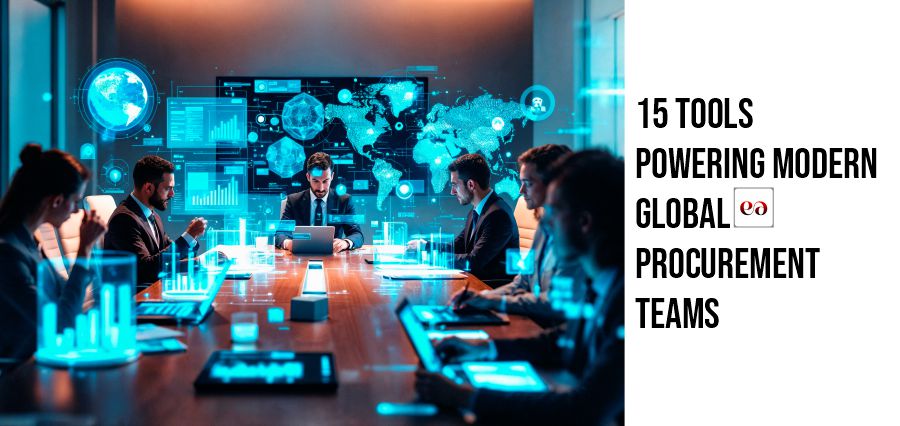
Global procurement teams sit at the center of business operations today. They manage complex supplier networks, multiple currencies, approvals across geographies, and risk in volatile markets. The right tools do not just automate processes. They empower teams to control spend, strengthen supplier relationships, mitigate risk, and drive strategic value. Here we explore 15 tools that procurement leaders rely on to streamline operations, improve decision-making, and deliver measurable results.
Enterprise Procurement Platforms Enterprise procurement platforms are end-to-end systems. They cover everything from sourcing and contract management to purchase orders, invoicing, and supplier performance. ● SAP Ariba stands out as a market leader in strategic sourcing, sourcing events, contract management, and supplier lifecycle management. It unifies procurement functions on a single cloud-based platform. ● Coupa provides a total spend management solution that combines procurement, invoicing, and real-time spend analytics. Its platform is built on community-driven intelligence and AI features that help teams identify savings opportunities and enforce compliance across units. These platforms help large global teams unify procurement activities and scale control across departments and regions.
Procure-to-Pay (P2P) Solutions P2P tools focus on the lifecycle from purchase requisition to payment settlement. They enforce workflows, speed up approvals, and reduce manual errors. ● Precoro combines spend control with approval workflows and budget tracking, making it ideal for mid-sized teams seeking visibility and control across multiple projects and locations. ● Procurify focuses on controlling organizational spending with clear workflows, mobile approvals, and real-time visibility into purchase activities. ● Tipalti integrates procurement with international payment capabilities, helping teams manage vendors in 120+ currencies. P2P systems are most valuable where procurement teams need to eliminate spreadsheets, enforce budgets, and centralize invoice matching.
Source-to-Pay (S2P) Suites
S2P platforms extend P2P capabilities with strategic sourcing and supplier intelligence. ● GEP SMART is built as an AI-powered source-to-pay solution that enhances spend classification, sourcing optimization, and supplier risk tracking. ● Jaggaer is notable for its broad suite, which spans sourcing, supplier management, and analytics for complex enterprise procurement teams. These suites help procurement teams move from transactional processing to strategic value creation.
Spend and Analytics Tools Spend analysis tools aggregate purchasing data across systems and deliver actionable insights. ● Sievo aggregates spend and performance data to reveal savings opportunities and benchmark supplier performance. ● SpendHQ delivers spend intelligence and supplier segmentation that advance strategic decision-making. Spend tools give procurement leaders a single view of organizational spend, uncovering patterns that warehouses and finance teams might otherwise miss.
eSourcing Platforms eSourcing is a category of tools that centralize competitive bidding and supplier engagement. ● Procol is designed to automate RFP management, supplier evaluation, and sourcing project planning. These platforms reduce sourcing cycle times while creating transparency in supplier selection. eSourcing transforms sourcing from manual processes to automated, data-driven decisions.
eProcurement Marketplaces Marketplaces connect buyers and suppliers with catalogues, search functions, and standardized purchase workflows. Public sector examples like Government e Marketplace (GeM) in India offer transparent pricing, centralized catalogs, and compliance controls for government buyers and suppliers. Marketplaces integrate directly into procurement workflows, bringing choice and price visibility without manual supplier outreach.
Procurement Intelligence and AI Tools
Procurement intelligence platforms use machine learning to surface insights that teams could not easily find manually. ● Suplari aggregates internal spend data with market signals to recommend sourcing decisions, highlight risk, and benchmark supplier performance. AI-driven insights help teams see trends sooner, recommend actions, and forecast the impact of procurement choices.
Supplier Risk and Compliance Tools Supplier risk tools monitor financial, operational, and environmental, social, and governance (ESG) metrics. Risk modules within platforms and standalone services help procurement teams avoid disruptions by assessing suppliers early and continuously. These tools automate alerts when supplier performance changes, while compliance tracking ensures adherence to regulatory and internal policies.
Contract Lifecycle Management (CLM) CLM tools automate contract authoring, negotiation, storage, and enforcement. Strong CLM systems are crucial for global teams because they ensure that every purchase aligns with agreed terms, helps with renewals, and flags compliance issues before they arise. Many enterprise procurement platforms include built-in CLM. Others specialize in contract workflows and clauses, enabling deeper legal control.
Supplier Relationship Management (SRM) Platforms SRM tools help procurement teams build, monitor, and strengthen strategic partnerships. They provide dashboards on supplier performance, compliance with quality metrics, delivery timelines, and even sustainability indicators. Good SRM tools ensure that suppliers are evaluated fairly and consistently and that collaboration extends beyond simple transactions.
Integration and ERP Connectivity Tools Modern procurement teams rely on connected systems.
APIs and integration modules ensure procurement platforms talk to accounting systems, enterprise resource planning (ERP) platforms, demand planning tools, and even logistics systems. This connectivity is vital for global teams that manage multiple currencies, regulatory environments, and financial systems.
Automation and Workflow Engines Automation kits support: ● Approval routing ● Purchase order creation ● Invoice data capture ● Exception handling Using workflows ensures consistent compliance with corporate and audit standards. Increasingly these engines incorporate machine learning to detect anomalies and prevent errors.
Mobile Procurement Tools Mobile capabilities allow team members to review purchase requests, approve orders, or engage with suppliers remotely. This flexibility matters for teams spread across time zones or managing field operations, enabling decisions without delays.
Supplier Discovery and Sourcing Networks Platforms that curate supplier databases and match buyers to potential vendors speed up sourcing. These networks give procurement teams access to global suppliers optimized for industry, geography, sustainability criteria, and capacity.
Open-Source and Government Procurement Platforms Open-source frameworks like OpenProcurement provide a free, flexible base for organizations to build custom procurement processes. These tools support transparency, especially in public sector procurement, where traceability, openness, and accountability are mandatory.
Choosing Tools That Scale Not all procurement teams need the same technology. Small teams often start with P2P tools that enforce budgets and control approvals. Growing organizations add strategic sourcing and spend analysis. For global operations that touch multiple entities, currencies, and compliance regimes, enterprise S2P platforms with AI and analytics unlock strategic value. Procurement technology is an investment in control, clarity, and performance. The right tools let teams focus on strategy rather than manual tasks. They increase efficiency, strengthen compliance, and reveal savings opportunities that would otherwise remain hidden.