
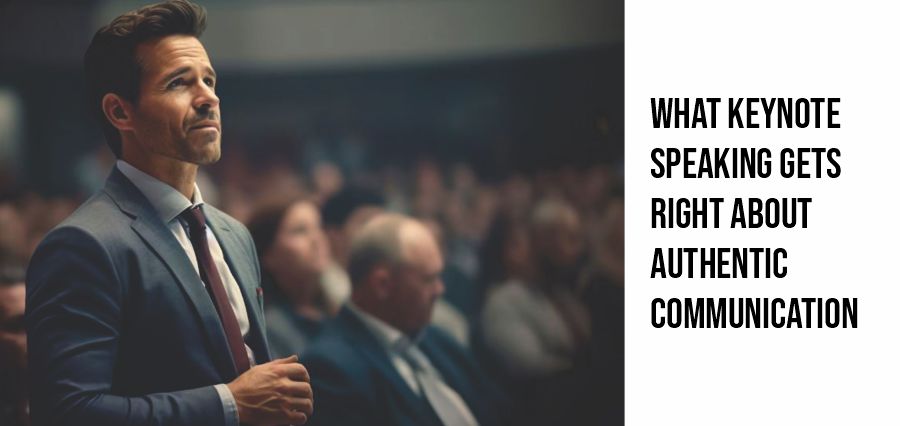
Keynote speaking is often associated with large conferences, polished presentations, and the occasional applause line. Yet, at its core, it demonstrates something deeper: authentic communication. According to the National Speakers Association, the global speaking industry generates over $1.5 billion annually, which signals that organizations and audiences value more than flashy visuals or rehearsed lines. They value connection. What keynote speakers get right is the understanding that communication is not just about transferring information. It is about making people feel seen, heard, and understood.
Authenticity in communication is more than a feel-good concept. Research from the Harvard Business Review shows that employees who perceive leaders as authentic report higher engagement and stronger trust in their organization. This principle applies directly to keynote speaking. When a speaker shares personal stories, admits mistakes, or speaks candidly about challenges, audiences respond with attention, empathy, and action. Keynote speaking demonstrates that authenticity is not a gimmick but a fundamental tool for meaningful connection.
One of the strongest elements of keynote speaking is the use of storytelling to communicate a message. Stories create context, engage emotion, and make ideas memorable. Consider Simon Sinek’s famous talk on leadership. The core lesson about starting with why is effective not because of abstract theories, but because it is wrapped in stories about real people and real struggles. Stories allow audiences to relate, often seeing themselves in the narrative.
What keynote speakers do effectively is balance the personal and the universal. They share experiences that are particular to them but highlight lessons that apply to everyone. This duality ensures that the message feels authentic while retaining broad relevance. It also models a communication approach that anyone can use. Whether speaking to a team at work or presenting an idea to clients, framing your message as a story makes it stick. Humans respond to narrative structure instinctively. It helps listeners process complex information in ways raw data cannot.
Communication is more than words. Keynote speakers understand the impact of body language and voice in conveying authenticity. Research in nonverbal communication shows that over 60 percent of understanding comes from tone, gesture, and facial expression rather than words. A speaker who gestures naturally, maintains eye contact, and varies vocal tone demonstrates confidence and sincerity simultaneously.
The takeaway here is that authentic communication is holistic. It is impossible to speak convincingly about a challenge you faced if your posture communicates detachment. Keynote speakers practice alignment between message and delivery. This principle extends beyond public speaking. In meetings, presentations, or even casual conversations, people can sense when communication is incongruent. Aligning tone, gesture, and message is a subtle but critical factor in being perceived as authentic.
Many people assume that authentic communication happens spontaneously. Keynote speakers show that preparation and authenticity are not mutually exclusive. Behind every effective speech is careful planning. Speakers outline key points, rehearse transitions, and anticipate audience questions. This structure provides a safety net that allows them to speak freely within a framework.
Authenticity thrives when the speaker knows the material well enough to focus on connection rather than worrying about forgetting lines. It is similar to a jazz musician who knows scales and chord progressions. Once the foundation is secure, improvisation becomes natural and expressive. In daily life, preparation can take the form of organizing thoughts before a conversation, noting key points for a presentation, or rehearsing how to deliver sensitive feedback. The principle is the same: preparation empowers spontaneity.
Keynote speaking also emphasizes emotional resonance over flawless delivery. Audiences remember moments of vulnerability and insight more than perfectly enunciated sentences. Brené Brown’s research on vulnerability supports this. When people allow themselves to be seen fully, even in professional contexts, they inspire empathy and trust. Keynote speakers demonstrate this principle by incorporating personal challenges or lessons learned into their presentations.
The lesson is that effective communication embraces imperfection. A pause, a moment of reflection, or even admitting a limitation can enhance credibility rather than diminish it. In everyday communication, allowing space for emotion and honesty strengthens relationships and builds trust. People respond to authenticity more than polish. Keynote speaking provides a blueprint for doing this well.
Authentic communication is not just about the speaker. Keynote speakers excel because they consider the audience at every step. They anticipate what matters to the listeners, how they might react, and which messages will resonate. This audience-first mindset ensures that communication is meaningful rather than self-serving.
For example, a keynote speaker addressing healthcare professionals will prioritize relevant examples, practical solutions, and shared experiences rather than abstract motivational statements. This principle applies to every context. Effective communicators tailor their message to the audience while staying true to their own voice. The key is balance: speak from a place of authenticity while acknowledging the perspectives and needs of those listening.
Keynote speaking provides a set of lessons that extend beyond stages and microphones. First, authentic communication requires clarity of purpose. Know what matters and communicate it intentionally. Second, storytelling is a powerful tool to make ideas relatable. Third, align body language and vocal tone with your message. Fourth, preparation enables confident spontaneity. Fifth, emotional honesty fosters trust. Sixth, audience-centered thinking ensures relevance.
These principles are actionable in any setting. Whether giving a presentation at work, leading a team discussion, or simply sharing an idea, practicing these elements improves connection and impact. Keynote speakers show that authenticity is a skill, not a trait, and it can be learned and refined with deliberate effort.
The essence of keynote speaking lies in its ability to communicate with authenticity, presence, and empathy. It demonstrates that real connection occurs when preparation meets vulnerability, when clarity meets storytelling, and when the speaker considers the audience while staying true to their voice. What this really means for anyone seeking to improve communication is that authenticity is neither accidental nor performative. It is intentional. By adopting the techniques that keynote speakers use, anyone can strengthen their ability to connect, inspire, and influence.
Authentic communication is not reserved for large stages or professional speakers. It is present in daily conversations, leadership moments, and personal relationships. Understanding its principles allows people to approach every interaction with clarity, confidence, and purpose. When communication feels genuine, it leaves a lasting impression. Keynote speaking teaches us that words carry weight, stories carry meaning, and honesty carries trust.
Read Also – John Santaferraro: The Imagineer Shaping the Future of Agentic AI





Welcome to the future of digital storytelling, where creativity meets innovation. We’re not just a magazine platform; we’re a team of passionate visionaries committed to transforming how stories are shared, celebrated, and experienced in the digital age. Join us as we inspire, inform, and redefine the world of digital magazines.
© Copyright 2026 | educationeureka | All Rights Reserved.