
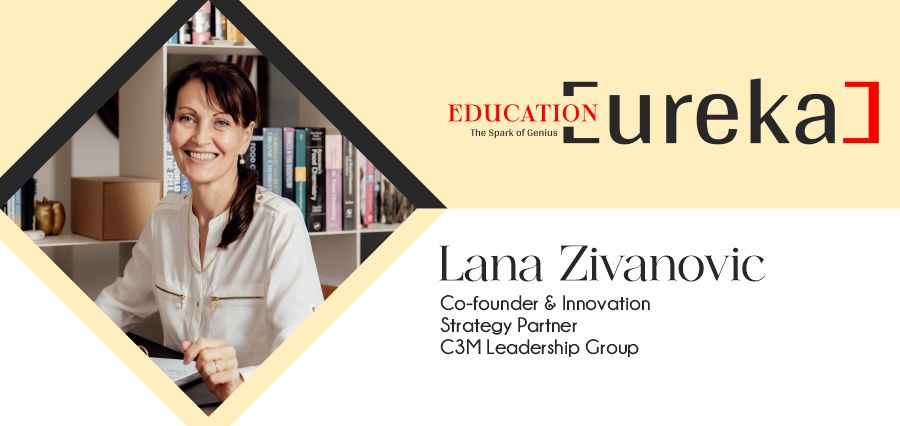
Advising companies, accelerators, and ministries as they modernize food research, strengthen capabilities, and build strong innovation pathways.
Food science often begins with simple experiences. A taste, a texture, a question about what happens inside a single ingredient. Many people move past these moments, but one moment stayed with Lana Zivanovic for years. As a teenager, she read a book that explored the benefits of honey for human health. The idea that food could protect and even improve life stirred a quiet excitement. It planted a belief that food carries power far beyond flavor and calories. This early curiosity opened a path she chose to follow with steady dedication.
That first spark shaped her academic choices. Lana chose to study food science and engineering. Each class revealed new layers beneath the surface of everyday ingredients. This pull toward understanding pushed her further, leading to a master’s degree in biotechnology and then a PhD in food biochemistry. She wanted to explore food at a molecular level, where small changes create large outcomes. Every step deepened her sense of purpose.
Her academic journey grew into nearly 15 years of teaching and research. She taught food chemistry, food biochemistry, and various food technologies. She also led research on multifunctional compounds such as dietary fibers with antioxidant activity and edible antimicrobial packaging materials. Her work earned support from major United States agencies, including the USDA, EPA, DOD, and NASA, along with many partners across the food industry. Through these years, she saw how education shapes future innovators. Students gained skills, yes, but they also gained curiosity, endurance, and confidence to solve real challenges.
After years in academia, Lana chose to widen her field of experience. She stepped into global research and innovation roles across Fortune 500 companies, global ingredient manufacturers, technology scaleups and venture-backed startups. She also supported accelerators and innovation hubs, and advised a national Ministry of Agriculture on efforts to modernize food systems and strengthen research translation.
Through each role, she saw repeating barriers. Scientific discoveries carried huge promise, yet progress often slowed because teams lacked shared priorities or clear alignment. These experiences shaped her understanding of what strong innovation truly requires.
Today, Lana brings all these pieces together through C3M Leadership Group. She guides teams through uncertainty with clarity, structure, and consistent execution. She believes learning lasts through every stage of life, whether through formal study or hands-on experience. Her commitment remains steady. Science can support human well-being, and she works each day to turn that belief into meaningful, lasting change.
Let us learn more about her journey:
Innovations in food, agriculture, and biotech often look strong in the lab, yet the real world introduces variables that science alone cannot fix. Here is where Lana brings clarity, grounding the problem in how organizations translate insight into value.
Lana notes that across these sectors, innovations often succeed in controlled laboratory environments but struggle in real market conditions. A recurring misconception among early-career scientists is that strong technical data alone drives success. In reality, market translation requires alignment between scientific potential, user needs, commercial strategy, and operational feasibility. Innovations fail when there is poor prioritization across crowded project portfolios or when critical factors such as IP development, sustainability implications, regulatory pathways, supply-chain constraints, and manufacturing scalability are considered too late.
She points out that another challenge is the lack of a shared definition of innovation within an organization. Teams may pursue different outcomes such as incremental improvements, breakthrough technologies, new business models, or process efficiencies. Without agreed expectations across R&D, marketing, operations, and leadership, misalignment arises, leading to delays, diluted resources, and inconsistent decision-making.
She adds that organizational culture significantly influences innovation success. Teams must feel safe to question assumptions, surface uncertainties, and acknowledge when a project is no longer viable. A culture that embraces early learning, fail-fast and pivot approaches, evidence-based reviews, and open communication dramatically increases the likelihood that promising ideas evolve into viable commercial solutions.
Organizations often drown in scattered ideas. Lana approaches this with a structure that still respects creativity. She begins by understanding the organization’s strategy and priorities, then mapping the innovation landscape. Priorities may relate to ingredients, applications, brands, geographies, or broader strategic drivers. The mapping includes understanding the ecosystem, interdependencies, and the context in which innovation must operate.
She then works with teams to identify gaps, blind spots, and internal strengths that influence success, such as specialized R&D capabilities, strong scale-up engineering, reliable supply chains, or a well-developed go-to-market function. With cross-functional input, each opportunity is assessed using strategic and market-based criteria, including scalability, commercial relevance, IP defensibility, cost-to-scale, and sustainability alignment.
From this process, she co-creates focused growth pathways, each with a clear roadmap and defined pivot points. These pathways match organizational strengths with market realities, allowing teams to focus resources where they will create the most value.
Breakthrough technologies often stall when the business model is unclear. In these situations, Lana’s approach focuses on creating coherence across scientific, commercial, and operational dimensions. When working with organizations facing early scientific success but unclear commercial direction—whether related to brand fit, target geography, regulatory feasibility, or investment requirements—she begins by bringing all relevant functions into a shared understanding of the opportunity. R&D, marketing, sustainability, IP, regulatory, manufacturing, and supply-chain teams work together to define the customer value proposition, market positioning, and the regulatory and operational steps required for success. From there, she guides the creation of a staged roadmap that integrates scientific milestones with business, sustainability, and IP priorities. This typically includes structured go/no-go checkpoints, defined evidence requirements, IP strategy progression, sustainability impact targets, application testing plans, and a realistic manufacturing and supply pathway. This way of working gives leadership clarity, reduces uncertainty, accelerates funding decisions, and positions the technology as a scalable growth opportunity. It consistently demonstrates the importance of connecting scientific ambition with business strategy early and aligning stakeholders behind a unified plan.
Young companies move fast. Structure helps them, but only when it fits their reality. Lana takes a light yet intentional approach. Startups and SMEs move with urgency, limited resources, and diverse team backgrounds, from researchers transitioning out of academia to experienced executives. Introducing innovation governance requires sensitivity and pragmatism.
She co-creates lightweight frameworks that promote clear communication, cross-functional learning, and disciplined execution. These frameworks rely on simple progression criteria, transparent evidence requirements, and concise documentation adapted to business realities. They help teams focus their limited resources, make early decisions, and avoid costly detours.
A second challenge is balancing time and bandwidth constraints. Startups cannot develop every capability internally, so selecting the right external partners, such as analytical labs, research institutions, pilot plants, regulatory experts, and manufacturing specialists, is essential. Effective governance integrates these partners in a way that strengthens, rather than overwhelms, the internal team.
When governance is tailored and evidence-based, it becomes an enabler, accelerating progress and improving confidence rather than serving as a constraint.
Startups, investors, and corporate teams often pull in different directions. Lana acts as a translator and a connector. She begins by establishing a shared understanding of value, risk, and realistic timelines. Startups prioritize speed, investors prioritize risk reduction and scalability, and corporate teams emphasize cross-functional alignment and long-term fit. These differences are natural, but when not made explicit, they create misalignment and delays. Stakeholders often have clear requirements but unclear prioritization. Her role is to ask probing questions, uncover assumptions, and help teams articulate what truly matters for progress.
Once aligned, she translates priorities into roadmaps, decision checkpoints, and evidence-based milestones that create a common language. By integrating scientific insight with commercial, operational, and investment criteria, she helps teams converge on a realistic, coherent path forward, accelerating collaboration and reducing ambiguity.
Real impact means teams do not depend on an external advisor forever. Lana focuses on creating independence. Her focus is on building capabilities that remain long after her engagement ends. She upskills teams in portfolio thinking, prioritization, risk assessment, decision discipline, and return-on-innovation logic. She introduces practical tools and routines grounded in scientific rigor but adapted for business execution.
She also coaches individuals across functions to build confidence and clarity in leading innovation. This increases agency, strengthens alignment, and equips organizations to evolve roadmaps and make informed decisions independently.
Food and agriculture innovations often have long development cycles. Lana helps teams measure what actually matters. Measuring ROII requires distinguishing scientific accomplishments from business value. Filing patents or generating data are important technical milestones, but the true business measure lies in outcomes such as granted patents with licensing potential, reduced cost-to-scale, accelerated development, or increased sales informed by new insights.
She helps organizations define critical success factors for each milestone, ensuring that progress is evaluated through technical readiness, commercial relevance, IP defensibility, operational feasibility, and financial contribution. This creates a decision-making system that guides investment toward opportunities with the strongest long-term potential.
Too much process slows innovation. Too little creates chaos. Lana works in the middle ground. Lightweight governance provides the clarity and discipline innovation teams need without slowing them down. It defines decision rights, evidence requirements, and risk-tracking mechanisms, ensuring teams stay focused on true progress rather than activity.
It accelerates early identification of risks and pivot points and strengthens alignment across functions. When governance is simple, transparent, and linked to value creation, it becomes an enabler, helping teams move faster and with greater confidence.
Sometimes, the most valuable outcome is stopping the wrong project early. Lana highlights how aligned milestones make this possible.
In one case, a novel ingredient showed excellent scientific promise, but supply-chain analysis revealed fundamental constraints. Raw materials, processing capability, and customers were spread across distant geographies, creating unsustainable costs and supply risks. Integrating these insights early prevented further investment and redirected resources toward opportunities with viable pathways to market.
Acting as a fractional head of innovation means stepping into very different environments. Lana reads the room and adjusts.
Working across multinationals, SMEs, startups, and research teams is energizing for her. Each environment has its own pace and decision style. She observes how teams communicate and make decisions, then adapts her leadership to complement their strengths while introducing needed structure and focus.
This work often blends strategic leadership with elements of executive and career-transition coaching, helping individuals grow into new responsibilities and navigate change. The result is stronger innovation outcomes and enhanced leadership capacity across the organization.
The market shifts. Technology shifts. Roadmaps must evolve just as quickly. Lana builds this adaptability into every plan. Adaptability comes from structured planning combined with continuous learning. She incorporates scenario analysis, evidence checkpoints, and regular assumption reviews. She maintains a lifelong learning mindset, tracking emerging technologies, AI tools, scientific advances, and new ways of working so roadmaps reflect current opportunities and not outdated assumptions.
Curiosity, rigor, and flexibility together ensure organizations can adjust quickly and capture emerging value.
After decades in R&D, startups, corporate teams, and advisory work, Lana has seen patterns that repeat across every sector. She believes innovation succeeds when curiosity, clarity, disciplined execution, and flexibility are consistently present. Strong science matters, but impact comes from clear communication, aligned expectations, objective decision-making, and the willingness to pivot when new evidence emerges.
Across academia, industry, startups, government, and now C3M Leadership Group, she has seen that innovation thrive when organizations combine disciplined progress with open-minded learning and when people are empowered to lead innovation with confidence and purpose.
Also read: Adriana Vadillo: Expanding Access to Advanced Tools Across Mexico





Welcome to the future of digital storytelling, where creativity meets innovation. We’re not just a magazine platform; we’re a team of passionate visionaries committed to transforming how stories are shared, celebrated, and experienced in the digital age. Join us as we inspire, inform, and redefine the world of digital magazines.
© Copyright 2026 | educationeureka | All Rights Reserved.