
A wayfinder’s approach to homelessness, wellbeing, and moral courage!
Some people grow up sensing when something feels off. A rule that slows help. A process that forgets the person waiting on the other side. That awareness became Tamara Bauman’s compass. Her motivation stayed simple and firm, grounded in the belief that people deserve lives anchored in safety, dignity, and choice.
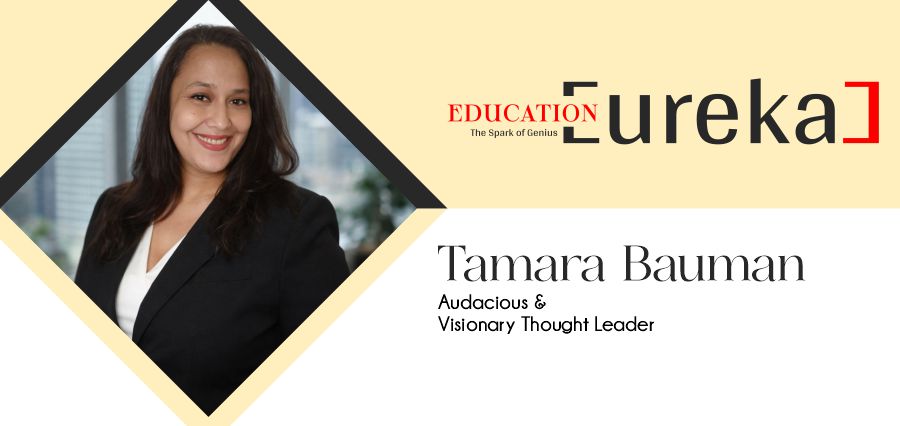
Tamara Bauman serves as Wayfinder and Steward for Wellbeing Revolution: Leading with Heart and Strategy – loto ma’a, ngutu kovi. She is a biracial woman, a systems weaver, and a policy strategist advancing community-driven solutions to homelessness across Seattle and King County. Her work resides at the intersection of people and policy, where values are translated into action.
Her purpose comes through clearly in her own words. “Everyone should have a human right to safety, dignity, and self-determination, not unnecessary bureaucracy or gatekeeping.” For her, care loses meaning when it becomes distant or conditional.
Years of work sharpened her understanding of how large systems operate. She saw patterns repeat, even with changing language and leadership. “History has demonstrated – over and over again – how systems fail to honor humanity’s universal drive for wellbeing,” she says. She points to safety, stability, mattering, meaningful access to resources, and social connectedness as shared human needs, drawing from FFI. When these needs remain unmet, people struggle regardless of effort or intent.
Tamara entered this field to rethink leadership and accountability. Early efforts centered on program responses to homelessness. With time, her focus expanded. She began working on policy, budgets, contracts, data, and public narratives, recognizing their influence on daily life. These forces often decide who finds stability and who remains stuck.
That shift led to a clear resolve. “I want to change that!”
From this resolve came Wellbeing Revolution, a culturally grounded, justice-driven approach that demands our systems prioritize human wellbeing in all its relational, material, cultural, and collective dimensions. Today, Tamara continues to walk alongside communities and institutions, guiding systems toward choices that honor people as whole, capable, and worthy of care.
Let us learn more about her journey:
There is often an assumption that leadership arrives in a single defining moment. A crisis. A speech. A visible turning point. For Tamara, leadership emerged differently. It arrived quietly, repeatedly, through accumulation rather than spectacle.
There was no cinematic moment. There were many quiet ones. Watching families do everything “right” and still be denied housing. Witnessing how quickly systems become punitive under political pressure. Seeing how obsessive risk management can override one’s humanity. Over time, she came to understand that waiting for permission was not neutral. It was a strategy that protected institutions, not communities.
Fear shows up when the status quo is challenged, especially in moments of social crisis. But fear did not silence her. Moral clarity grew louder once the consequences of inaction became undeniable. Leadership, for her, became a decision rather than a role. The decision to act anyway. To tell the truth. To build alternatives. To create tools that communities could use to demand better.
The Wellbeing Revolution did not emerge from branding exercises or strategic retreats. It emerged from friction. From lived experience. From time spent inside systems that routinely excluded the very people they claimed to serve.
As its founder, Tamara describes Wellbeing Revolution as a mosaic of personal and professional lived experiences, shaped across time, space, faith, identity, and cultural memory. Early in her career, she began questioning why communities experiencing homelessness were consistently absent from policymaking tables and community-based learning circles. At the time, as a young idealist, it did not occur to her to interrogate the power dynamics between community, culture, and government systems.
In retrospect, she recognizes that this analysis could only come later. It required personal lived experience and eighteen years of direct service provision to domestic violence survivors and families experiencing homelessness.
“Leading with Heart & Strategy – loto ma’a, ngutu kovi” became a refusal. A refusal to separate empathy from structural analysis. A refusal to disconnect healing from accountability. Wellbeing Revolution was born from struggle and from a desire to transform systems through personal narratives and storytelling. What could we learn from each other??
Many institutions now speak fluently about equity. The language has become familiar. The commitment often remains surface-level.
Tamara has seen how easily systems adopt the vocabulary of justice while avoiding the work that would disrupt their own power. The institutions entrusted with health and well-being continue to reinforce structural inequities through status quo contracting, regressive public policies, and unchecked leadership biases.
In her view, change requires more than acknowledgment. It requires taking responsibility for one’s role in maintaining systems of oppression and then acting to dismantle them.
She embraced this realization on a soul-deep level. Not privately, but publicly. By denouncing entrenched societal norms that distract from examining the structural root causes of inequity.
She remembers the first time she was recorded in an interview with Full Frame Initiative. In that space, she explicitly named white supremacy culture and settler colonialism as the racist underpinnings of housing and economic injustice.
Considering her personal trauma history alongside nearly two decades of direct service provision, her conclusion was clear. Homelessness and poverty are the direct results of poor public policy, wage stagnation, unaffordable housing, and institutionalized racism.
What keeps those crises in place is institutional complacency and a lack of visionary leadership. Through Wellbeing Revolution, her goal is to help communities move through the pain of historical harm, even when that means sitting with emotional and psychological discomfort. Change is hard!
Moral courage is often treated as an abstract value. In practice, it is concrete. Costly. Relational.
For Tamara, moral courage is the ability to speak truth to power with clarity and compassion while holding elected leaders and system partners accountable to their obligations as public servants.
Practically, it means refusing to compromise values for bureaucratic convenience. It means insisting on participatory action and community-defined wellbeing metrics as core benchmarks of success.
It also means refusing to gaslight entire communities with reports of “progress” that are not felt on the ground. It is saying no to funding or partnerships that undermine mission, vision, and values. It is investing in infrastructure, tools, policies, and evaluation frameworks that make it harder for systems to hide behind ambiguity.
Moral courage, in her practice, is relational. It requires repairing harm when missteps occur. It requires choosing integrity even when it costs privilege, comfort, or status.
Pasifika values are not an add-on to Tamara’s work. They are foundational.
These values teach that leadership is relational, accountability is multidirectional, and healing is ceremonial. Leadership is not about individual charisma. It is about weaving together strands of community agency.
Accountability is not punitive. It is restorative, ensuring systems honor commitments to the most vulnerable. Healing is not peripheral to well-being. It is central, and it unfolds through dialogue, ritual, and shared stories.
In practice, this means asking people whether they feel safe, respected, connected, and empowered. Not simply whether they were counted in a PIT count. It means elevating lived experience as expertise and compensating it accordingly. It means embracing co-governance models and using arts, storytelling, and culture to decolonize minds while tending to hearts and souls.
These values also form how she responds to conflict. When harm occurs, it is named. It is tended to. Trust is rebuilt through consistent action.
Working alongside unhoused families for nearly two decades has made one thing clear. Society consistently underestimates people’s intelligence, strategy, and resilience.
Tamara has witnessed the ways people survive adverse community conditions through mutual aid networks, informal childcare systems, resource sharing, and rapid adaptation under impossible constraints. Policy responses across systems fail to account for the grief and trauma they inflict when solutions are prescribed without consent or consultation with those most impacted.
The costs are cumulative. Evictions. Chaotic shelter environments. The accumulated toxic stress of housing instability. These experiences have long-term impacts on health, learning, and parenting. Too often, systems label people as “noncompliant” when they are, in fact, overwhelmed by institutional re-traumatization.
She argues that policy and systems change should begin by honoring what people are already doing to survive and using that information to create wellbeing pathways across all communities.
In moments of global and local uncertainty, justice models that replicate punishment deepen harm rather than resolve it.
Tamara defines transformative justice as the practice of addressing harm without reproducing punitive systems. It is about shifting structures, not simply resolving incidents. Authentic relationship-building within this framework requires spaces of trust where vulnerability and accountability coexist.
Unlike traditional approaches, transformative justice centers on truth and relational accountability. It is anchored in mutual respect, cultural humility, and listening without extracting. For her, transformative justice means sharing power, not just sharing stories.
Within systems work, it also means designing processes where healing is possible, community-driven solutions are codified into policy and practice, and leadership models treat accountability as a strength rather than a threat.
Data, as Tamara has seen it used, often functions as a tool of control.
Her creative process begins by listening deeply to the community and translating that collective wisdom into policy recommendations that elected leaders and system partners cannot ignore. Wellbeing Revolution blends quantitative data such as HMIS with qualitative indicators, including safety, belonging, dignity, trust, cultural connection, and mattering, to create holistic measurement standards.
This approach reclaims data as a tool of empowerment rather than coercive control. Emotion is not excluded. It is treated as evidence of legacy and impact. Story becomes a data point. Culture becomes a framework.
She often uses constellation maps, oceanic visual aids, braided mats, and vibrant colors to visualize data as living stories rather than static numbers.
Advocating for collectivist and cultural approaches within systems built on individualism comes with predictable resistance.
Tamara identifies institutional inertia as the greatest challenge. Systems rooted in rugged individualism and bootstrap theory resist collectivist frameworks, particularly when they require shifts in funding, governance, or accountability. Culturally resonant policy proposals may be welcomed symbolically, but they are often resisted structurally.
She sustains energy by staying close to community wisdom and by developing tangible tools that move ideas into practice. Audits. Scorecards. Policy proposals. Training materials. She also prioritizes her nervous system by exiting toxic relationships and environments that limit innovation.
Healing and recovery are now part of her leadership practice. What gives her hope is the growth of solidarity movements and witnessing communities step into their power, often forcing policymakers to listen differently.
Ceremonial traditions offer frameworks for dialogue that formal meetings cannot replicate. Talanoa and Kava gatherings represent relational accountability through story-sharing, vulnerability, and collective decision-making. These traditions honor a social contract rooted in mutual respect, deep listening, and layered storytelling, where people can speak their truth and still expect dignity.
These practices inform how Tamara moves through the world: slower pace, stronger boundaries, cultural humility, and space for emotional expression without shame. She notes that authenticity is often discouraged in nonprofit and government spaces, where organizations may double down on power hierarchies even when staff articulate pain or dissent.
Her aim is to bring Talanoa into consulting and organizing spaces to leverage collective wisdom and transform public policy, including the integration of workplace psychological safety provisions. In conflict resolution, these practices remind participants that dialogue is about balance, not winning or losing.
Movement progress is not measured by branding. It is measured by behavior.
Tamara is encouraged by the growing recognition of lived experience as a genuine asset to collective impact work. Communities need to see themselves reflected in systems where wellbeing, equity, and justice are defined collectively rather than prescriptively.
Another signal is increased interest in Wellbeing Revolution’s tools for measuring wellbeing through multiple perspectives and evaluation matrices. When funders ask to review scorecards, reporting templates, training curricula, and data dashboards, it signals readiness for a new accountability model.
“Wellbeing Revolution: Leading with Heart & Strategy – loto ma’a, ngutu kovi is ready to deliver!” Most importantly, progress shows up when communities pressure institutions to change their behavior, not just their external messaging.
Leading with integrity often means moving before systems are ready. Tamara’s call to action is direct: do not wait for permission to tell the truth. Start where you are, with what you can build, and with who you can build it alongside. Protect the heart by pairing it with strategy: document what is visible, map decision points, and design alternatives that make it easier to do the right thing.
Finding community is essential. Liberation is not a solo sport, even when someone is “flying solo” as a founder. Systems feel permanent until they do not. The work is not about being palatable but about being effective, ethical, and anchored in community.
“Difference” is brilliance, story is evidence, and ceremonial practice is strategy. Building constellations of resistance with kindred spirits creates cultural revolutions rooted in collective agency. Systems of power will resist, but courage ripples.
Tamara emphasizes one final truth: healing oneself is a radical act with the power to ignite systems change, but it requires choice. Humane homelessness response systems cannot be built with burned-out people, extractive funding, or dehumanizing data practices.
Wellbeing Revolution exists as both a policy framework and a cultural shift toward relational accountability, community power, and a future where wellbeing is the baseline for all decision-making.
Read More : 7 Leadership Tactics for Remote Team Success