
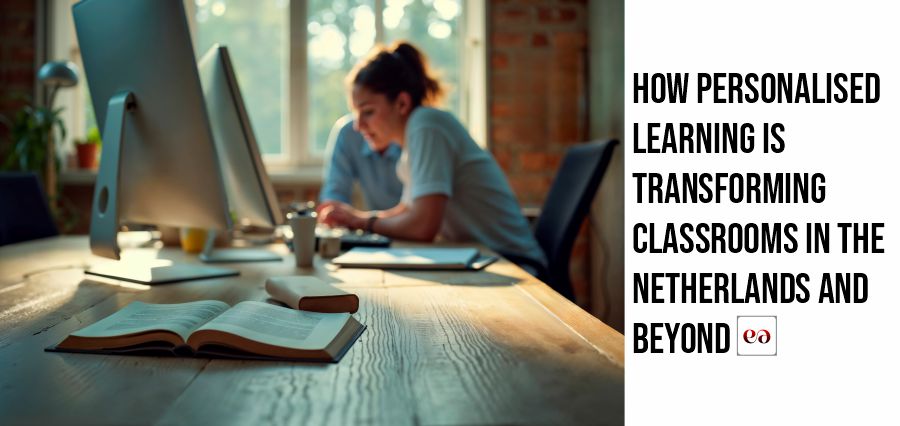
Teaching that fits every learner!
In recent years, education has begun shifting away from “one-size-fits-all” classrooms toward teaching models that recognise each student’s unique learning style, pace, and interests. This shift, known as personalised learning, is gaining traction across the globe. Schools in the Netherlands are among those pioneering these changes, and their efforts offer valuable lessons for education systems everywhere.
Personalised learning adapts instruction to match a student’s strengths, needs, prior knowledge, and interests, rather than treating every student as identical.
That means changing when, where, and how students learn. Some may move faster, others slower. Some may work individually, others collaboratively. Teachers become guides rather than lecturers, and learners gain more control over their education.
Personalised learning also weaves in modern technologies: adaptive platforms, real-time analytics, and digital resources. These technologies help tailor learning paths, track progress, and enable flexible scheduling.
Traditional classrooms often struggle to meet the varied needs of students, some learn quickly, others need more time; some thrive on discussion, others on self-study. In such settings, stronger students may get bored while others lag behind. Personalised learning aims to close this gap.
Research supports its promise. Students in personalised learning environments tend to show better engagement, higher motivation, and improved academic outcomes compared to peers in traditional settings.
By allowing students to learn at their own pace, follow their interests, and receive support tailored to them, education becomes more effective and meaningful.
Schools in the Netherlands have embraced personalisation in several ways, combining pedagogical reforms with technology adoption. The national curriculum gives schools flexibility: rather than prescribing rigid teaching methods, it defines broad learning objectives and lets schools choose how to meet them.
One example comes from secondary schools using mobile technology to empower learners. In such settings, students take more control of when and how they study, which in turn strengthens motivation, supports autonomy, and boosts achievement.
Vocational and project-based programmes also reflect personalisation. For instance, a track in some Dutch high schools called Technasium blends science, design and real-world problem-solving: students collaborate on projects commissioned by companies, choose subjects that match interests, and engage in hands-on work rather than traditional lectures.
At higher education level, institutions like Open University of the Netherlands (OpenU) have pioneered flexible learning paths. Through adaptive and personalised platforms, the university enables working professionals and non-traditional students to learn at their own pace and in their own schedule.
Studies of personalised adaptive learning show promising results. A 2024 review covering higher-education institutions found that in 59% of studies, adaptive learning led to improved academic performance; in 36%, it increased student engagement.
Beyond grades, personalised learning nurtures motivation, confidence, and self-directed learning. Students feel more ownership of their learning process, they set goals, track their progress, and make choices aligned with their strengths.
Personalisation also offers a path toward more equitable education. While it does not guarantee equal outcomes for every student, it focuses on equity in terms of providing adequate support so every learner can develop their capacities.
For diverse learners, those with different backgrounds, learning preferences, or special needs, personalised learning can level the playing field by offering flexibility and tailored support.
Personalised learning is not a silver bullet. It requires thoughtful planning, training for teachers, investment in technology (when digital tools are involved), and a shift in mindset from uniformity to flexibility.
Implementing personalised learning effectively also demands careful design: educators must build accurate learner profiles, monitor progress, and adapt teaching strategies dynamically.
Finally, while personalised learning helps with engagement and equity, it does not automatically guarantee equal outcomes. Success depends on quality of implementation, teacher support, and access to resources.
Personalised learning is transforming classrooms, not just in the Netherlands, but around the world. By shifting focus from average students to individuals, education becomes more inclusive, engaging, and effective.
Examples from Dutch secondary schools, vocational programmes like Technasium, and institutions like the Open University of the Netherlands show how adaptable teaching strategies and technology can support a wide range of learners.
Evidence suggests that when implemented well, personalised learning boosts academic performance, engagement, motivation, and equity.
For any school or education system seeking to meet the needs of all students, personalised learning offers a viable path forward. With intentional planning, thoughtful implementation, and commitment to student-centred practice, it is possible to move beyond one-size-fits-all teaching, into classrooms where every student can learn in the way that suits them best.
Read Also – How Short courses and Modular Eertification are Reshaping Adult and Continuing Education



Welcome to the future of digital storytelling, where creativity meets innovation. We’re not just a magazine platform; we’re a team of passionate visionaries committed to transforming how stories are shared, celebrated, and experienced in the digital age. Join us as we inspire, inform, and redefine the world of digital magazines.
© Copyright 2025 | educationeureka | All Rights Reserved.